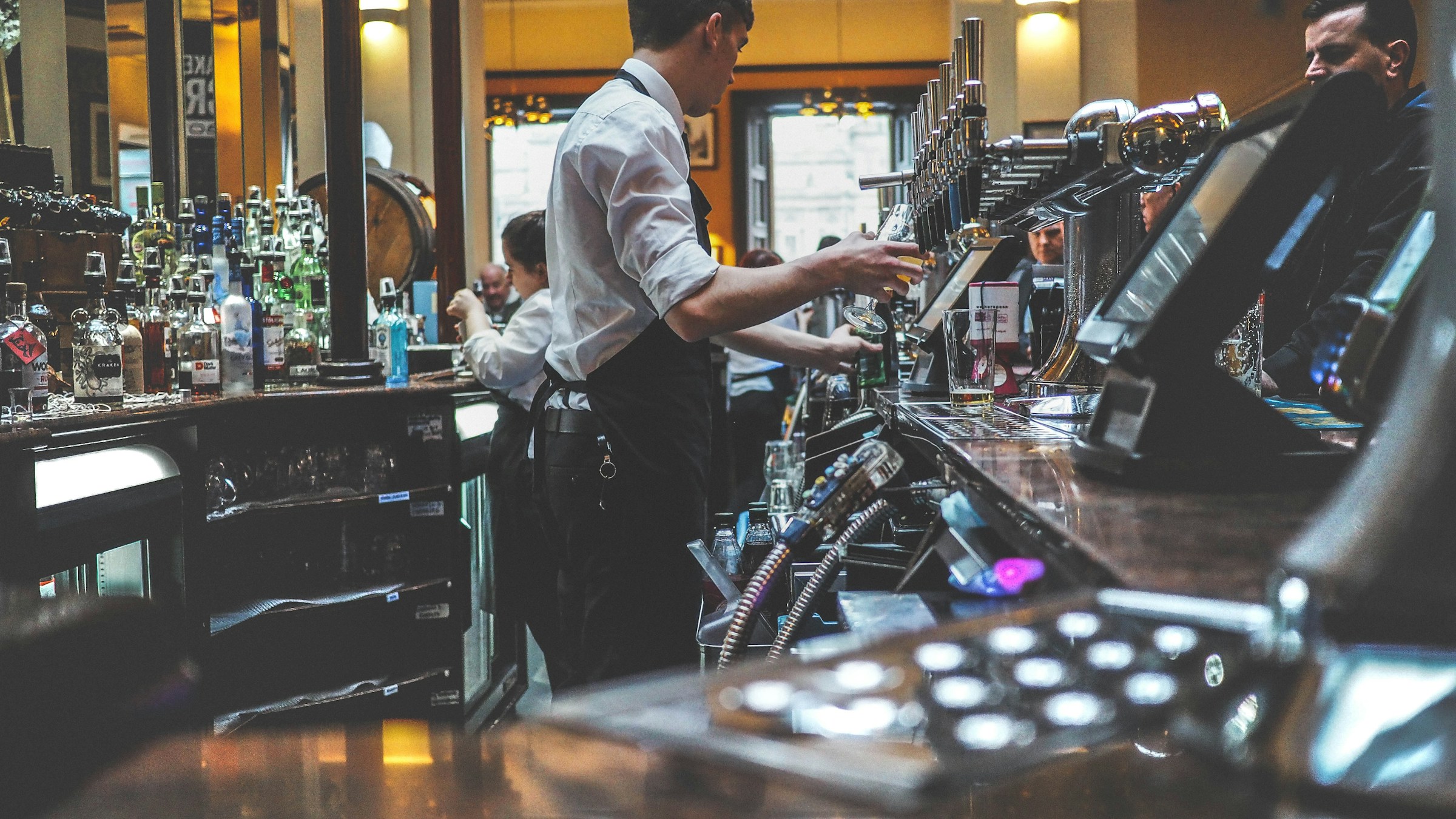
Brands want sampling programs in December for an obvious reason: the rooms are full. For a venue the calculation runs the other way, and the two are worth separating before agreeing to dates.
What a busy night is good for
Volume. If the brand's target is a sample count, a packed room clears it quickly and nobody has to work hard to find takers.
Trial among people who aren't your regulars, too. A holiday crowd contains more first-time visitors than an ordinary Tuesday, which is genuinely useful to a brand and occasionally useful to a venue.
What a busy night is bad for
Staff attention. This is the real cost and it's highest exactly when the room is fullest. A sampling program asks the bar team to do something unfamiliar — prompt a step, ring something a particular way, answer a question about a product. On a quiet night that's free. On the busiest night of the year it competes directly with ticket times.
Execution quality. The steps that get skipped during a rush are the ones the program depends on. If payment depends on a guest completing something on their phone, a drink poured at 10pm on a Friday in December may not be a drink you get paid for.
Reading the result afterward. Both sides should know this one. A venue's sales in a holiday window are elevated by the calendar, not by the program. Any number produced from that period will overstate what the program did, and a brand that plans next year against it will come back with expectations the room can't repeat in March.
This gets worse the shorter the look. Event Marketer's 2019 measurement benchmarking report, drawing on more than 250 responses from event marketing executives and agencies, found 54% of consumer brands using a three-month measurement window — and sampling readouts typically land well inside that, four weeks after the event, because that's when the campaign closes rather than when the effect does. Four weeks from a December event is January, which is its own distortion in the opposite direction.
The version that works
If a brand wants the busy season, the terms should reflect what it's asking for.
A shorter window. Two concentrated weeks beats six thin ones, and in December it beats them by more, because the staff attention cost scales with the length of the program rather than with the payment.
A realistic target. A sample count set without reference to how many covers your room actually does is a planning failure that will arrive labeled as an execution failure.
A simpler counting step. Whatever the mechanism, ask what happens when it gets skipped during a rush, and who absorbs it. If the answer is you, that's a reason to move the program to January rather than a reason to decline it.
Gratuity funded explicitly. A busy shift where staff work a promotion for free is the fastest way to lose the room's cooperation for the second event.
The honest recommendation
For most venues the better trade is a quieter window. A sampling program on a slow Tuesday brings people in who wouldn't otherwise have come, which is worth more than adding a step to a night that was already going to be full.
If a brand insists on December, it should be paying for the inconvenience rather than benefiting from the traffic for free.
December is the month brands ask for and the month a venue should price hardest. Happy to talk through timing on any offer, ours included.