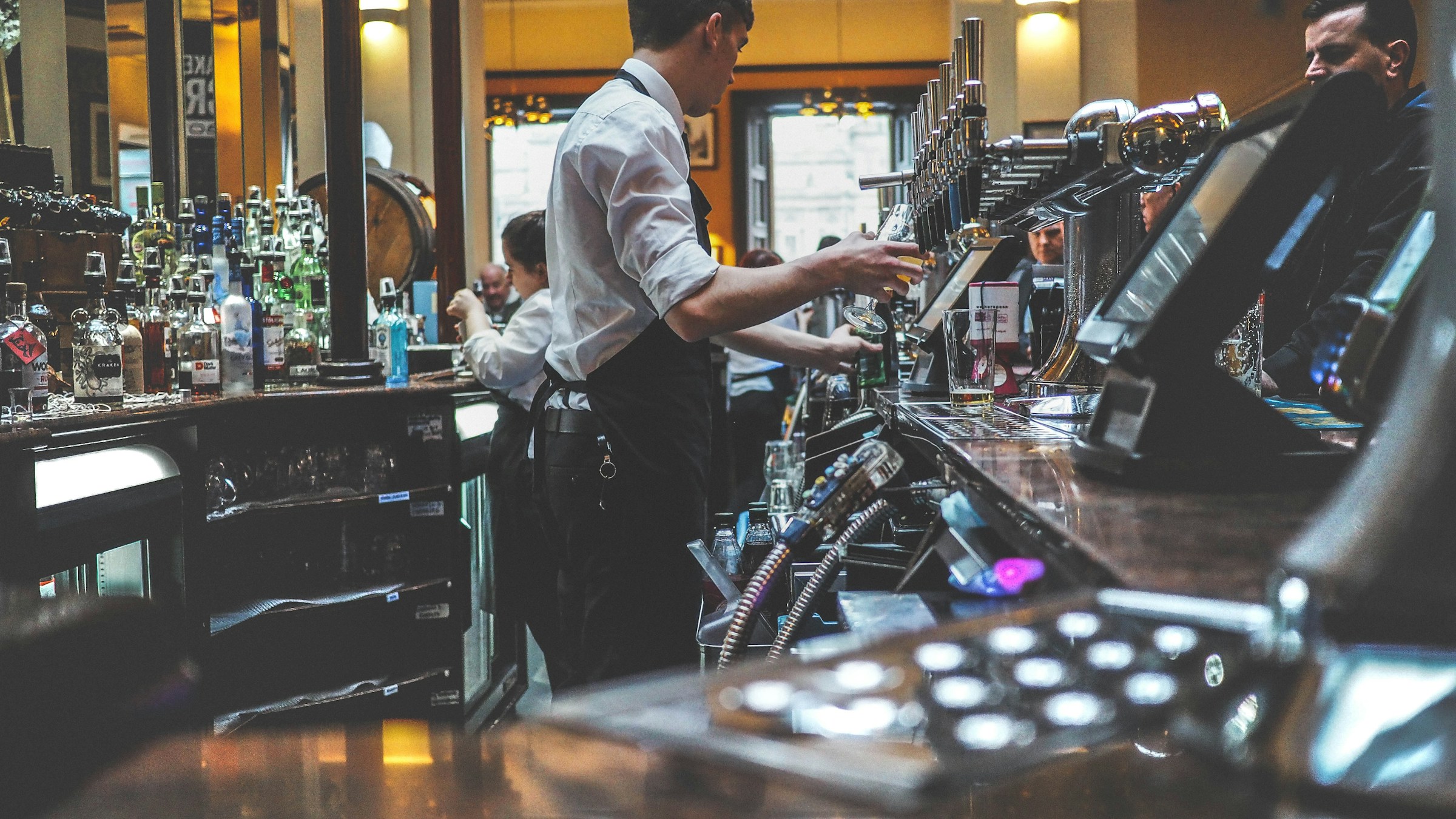
A brand and a venue can run the same sampling event, both consider it a success or a failure, and be describing entirely different things. The disagreement is structural rather than dishonest, and it explains most of the awkward conversations that happen two weeks later.
What the brand counts
Samples poured, and then whatever can be inferred from them. The count is the unit, because it's the thing the brand paid for and the only figure that exists at every venue.
That emphasis is industry-wide rather than specific to any one brand. Event Marketer's 2019 measurement benchmarking report, based on more than 250 responses from event marketing executives and agencies, found 81% of consumer brands tracking total visitors or attendees against 54% tracking sales generated from the experience. Attendance is the default because every program can produce it.
Everything else in the brand's readout is derived from that number — cost per sample, cost per venue, comparisons across the program. If the count is soft, all of it is soft.
What the venue counts
Covers, average spend, turn time, tips, and whether the bar team had a bad night.
None of those appear in the brand's report, and most of them matter more to the operator than the sample count does. A night where fifty samples were poured and the bar ran twenty minutes behind on tickets is a bad night for the venue and a successful event for the brand. Both are correct.
Where the two actually meet
Three places, and they're worth naming because they're the only shared ground.
Did the samples get poured? Both sides care, for different reasons. The brand wants the number. The venue wants to know whether the target was set against anything real — a target built without reference to how many covers the room does on a Tuesday is a planning failure that arrives at the venue labeled as an execution failure.
Did the guest buy something else? A guest who registers for a sample is in the room and seated. That's the venue's upside and it rarely appears in the brand's report at all, because the brand isn't looking at the venue's other revenue.
Was it worth doing again? The only question that matters to both, and the one neither party's metrics answer on their own.
What to ask for before the event
The venue holds records the brand doesn't — timestamped transaction data for the event dates, frequently more precise than whatever the brand is working from. That asymmetry is worth using.
Ask what the brand will report afterward and whether you'll see it. Ask how the sample count will be produced and who produces it. And ask what happens if your record and theirs disagree, because that conversation is much easier before the event than after a payment arrives short.
Venues and brands both read us this way, which is uncomfortable and useful. If you're on either side of a disagreement about a night, we'll walk through what each party could actually see.